Inside the Avalon Collection

Avalon is one of the most enduring places in myth. In Celtic mythology and Arthurian legend, it appears as a mystical island, often imagined as a kind of earthly paradise, known in some tellings as the Isle of Apples. It is remembered as the place where King Arthur was taken after his final battle to recover from his wounds, and as a place associated with Excalibur, the legendary sword. More than a location, Avalon has long suggested something deeper: healing, passage, protection, and the possibility of renewal after suffering.


At Rimeh Garden, that symbolic world became the starting point for the Avalon Collection.
This collection looks across myths, goddesses, religious relics, and ancient stories from different cultures, gathering forms and references that felt aligned with the emotional language of the brand. Rather than treating these references as distant ornament, Avalon brings them into a more intimate scale. The aim was to create everyday wearable jewelry that still carried the weight of something older, quieter, and more enduring.
View Full Collection Here.
The Meaning of Avalon
What drew us to Avalon was not fantasy for its own sake. It was the feeling the idea carries.
Avalon stands at an interesting threshold. It is not simply a paradise, and not simply a place of escape. It is a place associated with what comes after injury, after conflict, after the visible struggle. That mattered to us. The collection is built around a phrase that may sound contradictory at first: strength in healing.
Healing is often imagined as something soft, passive, or secondary to strength, as though strength belongs only to the unbroken. We do not see it that way. In the world of Eutopia, and in the idea of personal sanctuary that shapes Rimeh Garden, pain is not denied, edited out, or turned into performance. It is acknowledged. Strength in healing begins there.
This is not empowerment in the loud or motivational sense. It is not an inspirational slogan. It refers to something more restrained and more honest: the particular calm that can appear after long hardship, when healing is no longer surface-level but real. The kind of confidence that does not come from image, force, or performance, but from experience. From having lived through something. From having become lighter without becoming hollow.
That, to us, is Avalon.


Myth, Relics, and Ancient Stories
The Avalon Collection moves through symbolism drawn from multiple cultures and moments in human history. Goddesses, sacred forms, relic-like objects, and mythic references all appear within the collection’s visual language. What connects them is not chronology or region alone, but a shared sense of endurance, devotion, and inner force.
We were interested in stories and symbols that carried more than surface beauty. Many of the references behind Avalon have survived because they continue to hold emotional charge. They speak to things people have always returned to: protection, faith, femininity, suffering, rebirth, strength, and the ways human beings search for meaning through form.
At Rimeh Garden, we selected only a small number of these stories. Not to catalogue mythology, but to work with the ones that felt most relevant to our own world. The goal was never to reproduce ancient objects literally. It was to translate their atmosphere into jewelry that could still be lived with now.

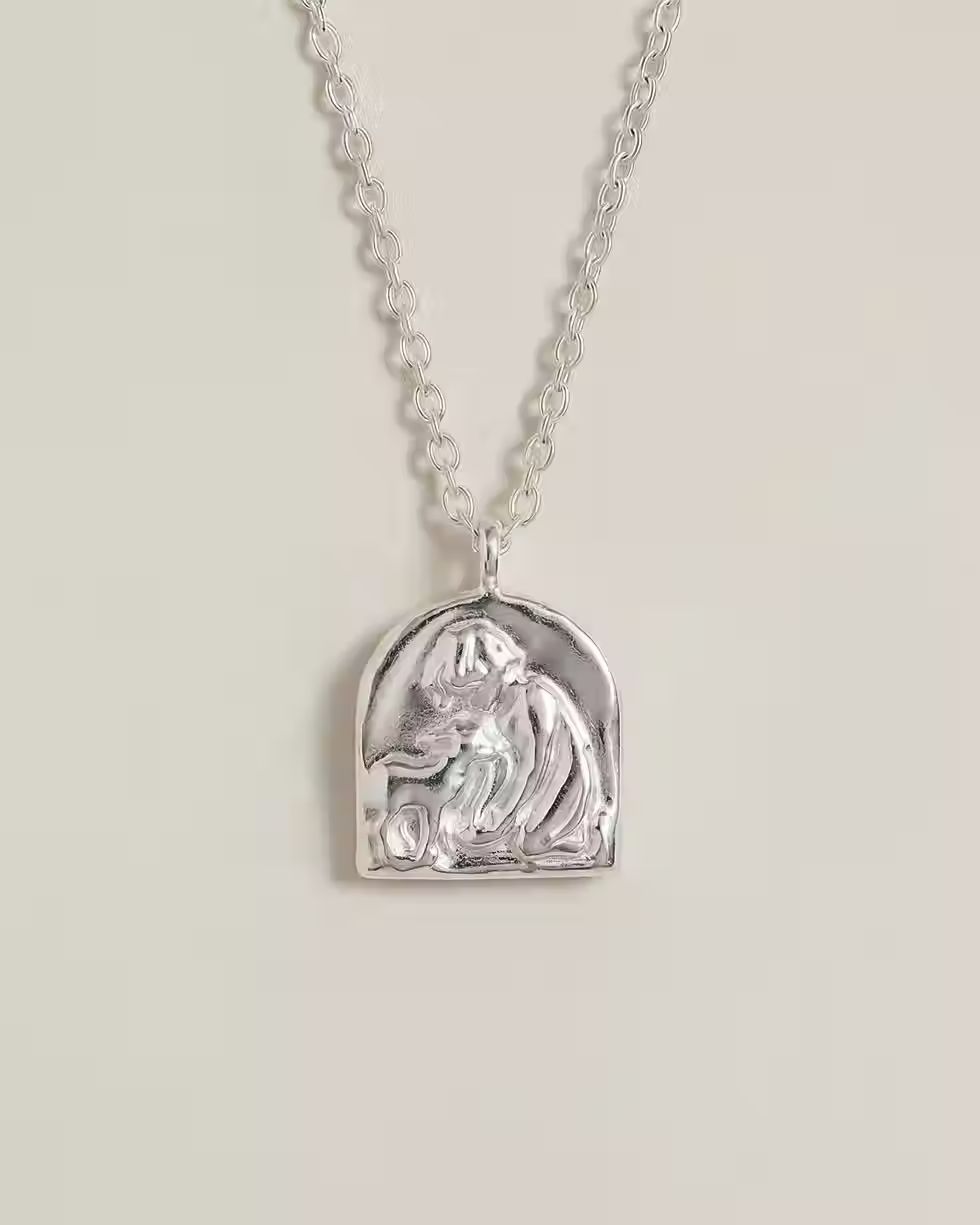

Everyday Jewelry with the Weight of a Relic
One of the central tensions in Avalon is the relationship between the ancient and the everyday.
Relics are often understood as objects set apart from daily use. They are held, preserved, or revered at a distance. Jewelry, by contrast, moves through ordinary life. It is worn against the body, carried into routine, folded into the personal rhythm of the wearer. The Avalon Collection sits between those two conditions.
We wanted these pieces to feel wearable, but not emptied out. Refined, but not detached from meaning. Each design holds some trace of the relic, the myth, or the sacred object, while remaining something that can live in the present. In that sense, the collection is not about costume or theatrical reference. It is about keeping symbolic weight close in a quieter form.
That closeness matters. A symbol becomes more intimate when it is worn. It leaves the museum, the text, the legend, and becomes part of someone’s own life.


Strength in Healing
The emotional key of Avalon is strength in healing.
This phrase sits at the centre of the collection because it reflects a kind of strength we rarely see described with enough honesty. It is not the strength of endless resistance, and not the strength of pretending nothing hurts. It is the strength that can emerge after suffering has been lived through, not erased. The strength of becoming calmer, more secure, and less performative because experience has already done its work.
There is a particular dignity in that state. It is often quiet. It does not need to convince anyone. It does not announce itself as triumph. It simply exists as a steadier kind of presence.
For us, Avalon belongs to the women who have lived through something. Women whose confidence is no longer borrowed from approval or performance, but shaped by hardship, healing, and a deeper knowledge of themselves. In that sense, the symbols within the collection become more than references. They become relics of strength.
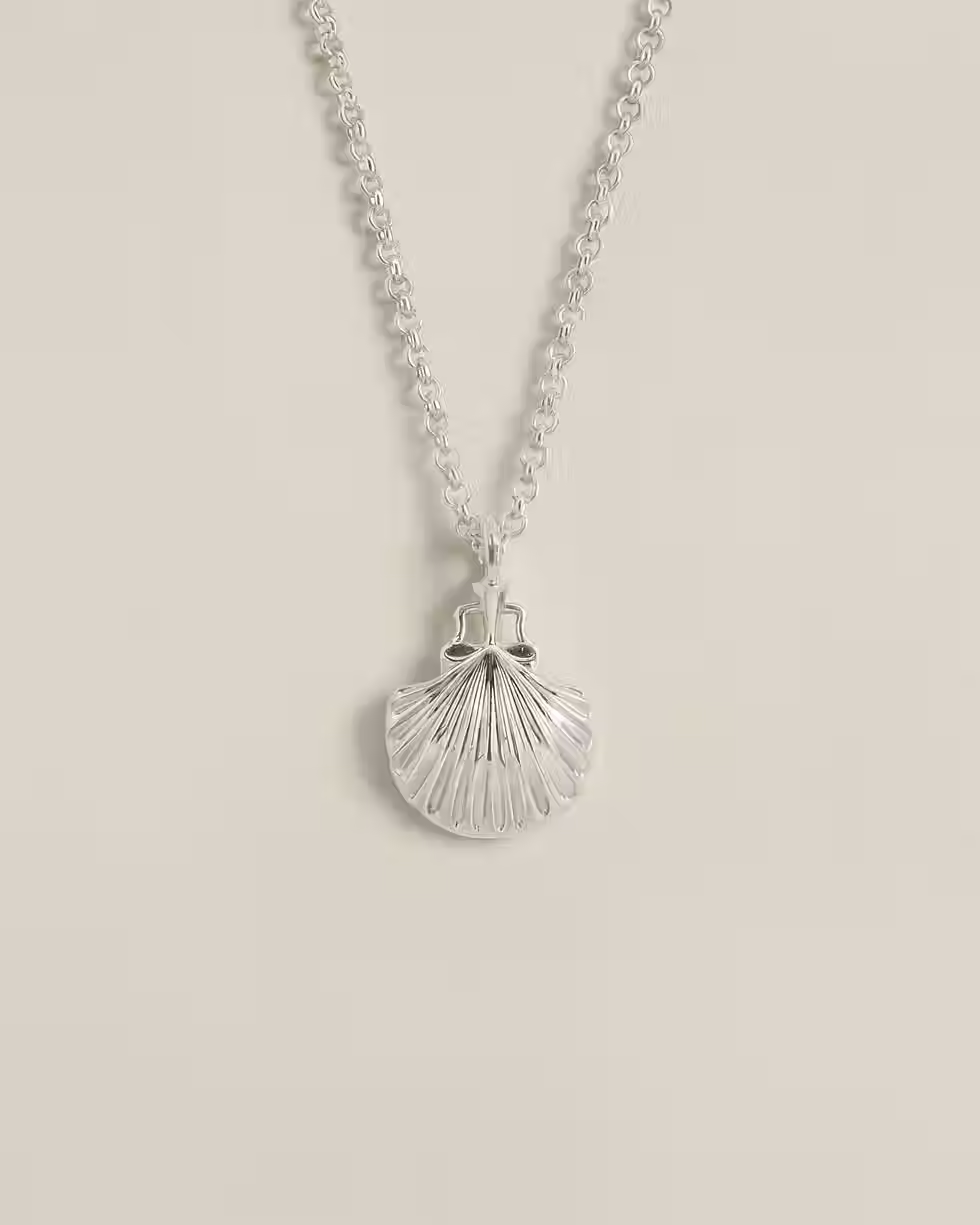


A Collection Shaped by Eutopia
Avalon also sits naturally within the wider philosophy of Rimeh Garden.
Eutopia, the idea that underlies the brand, is not about perfection or escape. It is about a condition that remains good and livable despite human imperfection. It allows room for pain, contradiction, recovery, and change. In that world, healing is not a side note. It is part of how life becomes inhabitable again.
That is why Avalon matters to us. It is not a collection built around fantasy as distance. It is built around myth as emotional truth. Around the idea that symbols can still help people hold onto something real. Not because they solve life, but because they can give shape to the parts of it that are difficult to name directly.
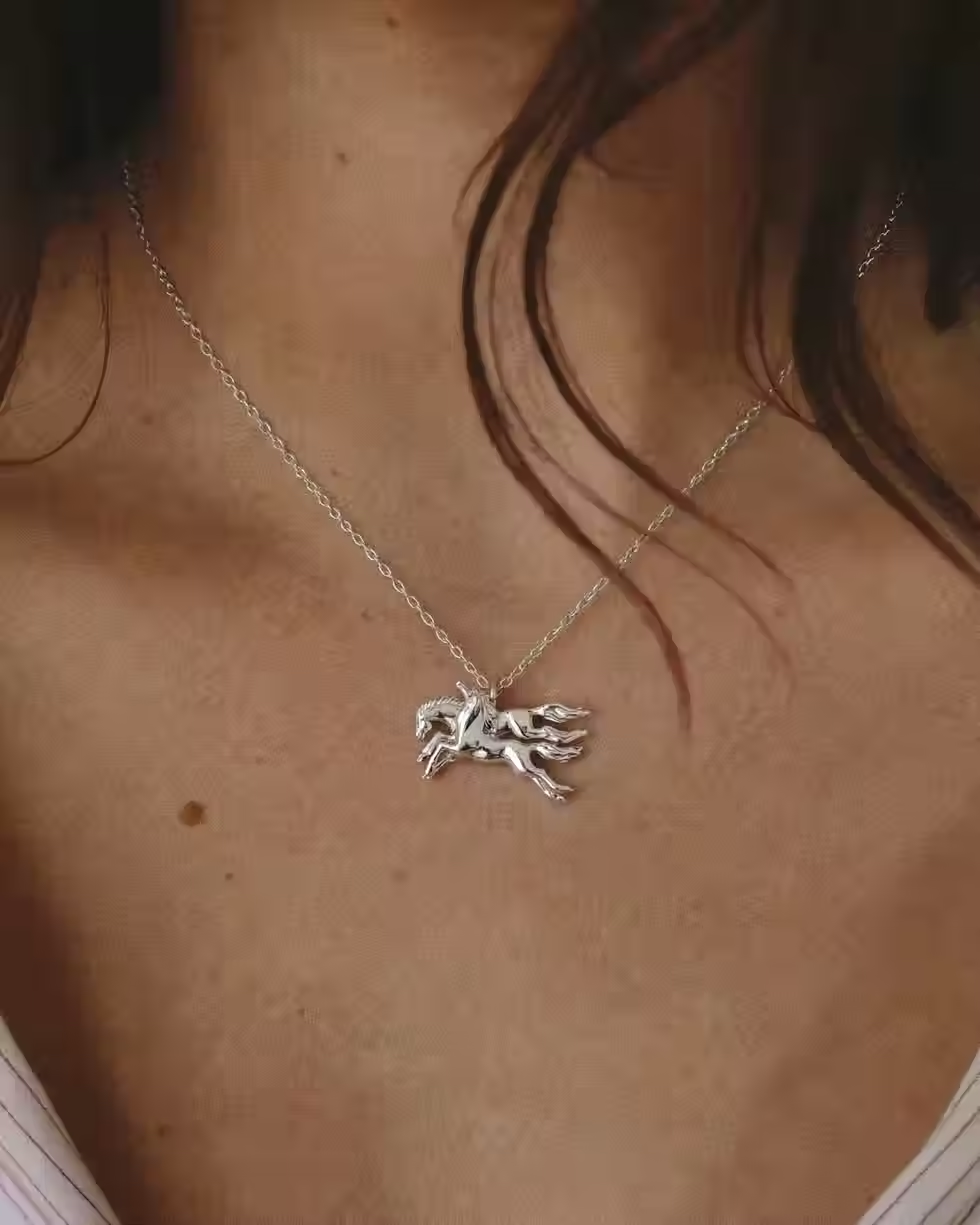
The World of Avalon
Avalon is a collection of symbols, but also a collection of atmosphere. It is calm rather than loud. Sacred without becoming heavy. Strong without needing aggression. It carries softness, but not fragility. It carries history, but not nostalgia.
At its core, Avalon is about what remains after suffering begins to loosen its grip. The lighter state that comes after real healing. The kind of strength that is not performed, but quietly held.
That is the world the collection looks toward.
And that is why Avalon remains one of the clearest expressions of what Rimeh Garden tries to make: jewelry that can carry a symbolic life, while still belonging to the everyday life of the person wearing it.
Article Contact
Yoko Ozawa


Comments